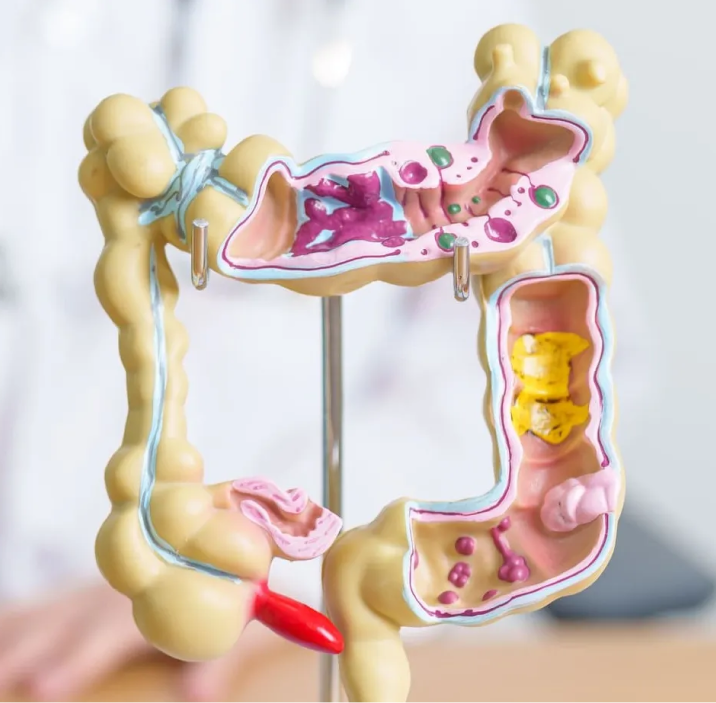
The anal canal is 2-4 cm long and surrounded by a group of muscles called the anal sphincter complex, this acts to maintain continence. The lining of the anal canal changes from squamous epithelium to columnar epithelium as it goes upwards into the rectum. Cancers can occur involving the lining cells and as such can be squamous cell cancers, transitional cell cancers or columnar cell cancers (adenocarcinomas).
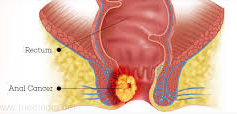
Most anal canal cancers are squamous cell cancers.

Age>50
Smoking
Long-standing inflammation including fistulas(tracks/tunnels) and sepsis/scarring
Anal warts associated with Human Papilloma Virus
Anal sex with multiple partners

Anal lump
Anal pain
Bleeding
Anal pressure
Bowel habit change

Examination including peri-anal inspection and digital rectal (glove) examination.
Biopsy of the area to establish tissue type.
Anal ultrasound to establish involvement of sphincter muscles.
MRI for large complex lesions
CT scanning to include abdomen, pelvis and inguinal regions are performed to estimate the stage of the disease.

Anal cancer is staged by the TNM system
T1 <2cm, T2<4cm, T3 sphincter involvement, T4 through sphincter N0 no lymph nodes, N1 0-3 lymph nodes positive for tumour cells, N2 >3 lymph nodes positive for tumour cells.
M0 no distant metastases, M1 distant metastases

  • Investigations
  • Treatment
  • Local Surgery
  • Radical Surgery
  • Prognosis

Anal biopsy(examination under anaesthetic).
Colonoscopy
CT scan
PET scan if disease is large/complex

Combined radiation therapy and chemotherapy. There is a body of evidence that Radiation therapy to the anal canal and sometimes to the groin regions, in combination with intravenous chemotherapy which consists of 5-Flourouracil and Mitomycin C gives good results with relatively high cure rates. This treatment is considered in most cases of anal cancers, some exceptions do apply.

This is reserved for superficial lesions at the anal margin.

This consists of Abdomino-perineal resection of the rectum. The operation excises the anal canal and rectum and the patient has a permanent colostomy. This operation is reserved for anal cancers which fail to respond to chemoradiation or recur after chemoradiation.

In those cases that are treated for cure the survival rates approach 80% at 5 years.

CTA-img

Book an appointment